How to Travel Switzerland by Train
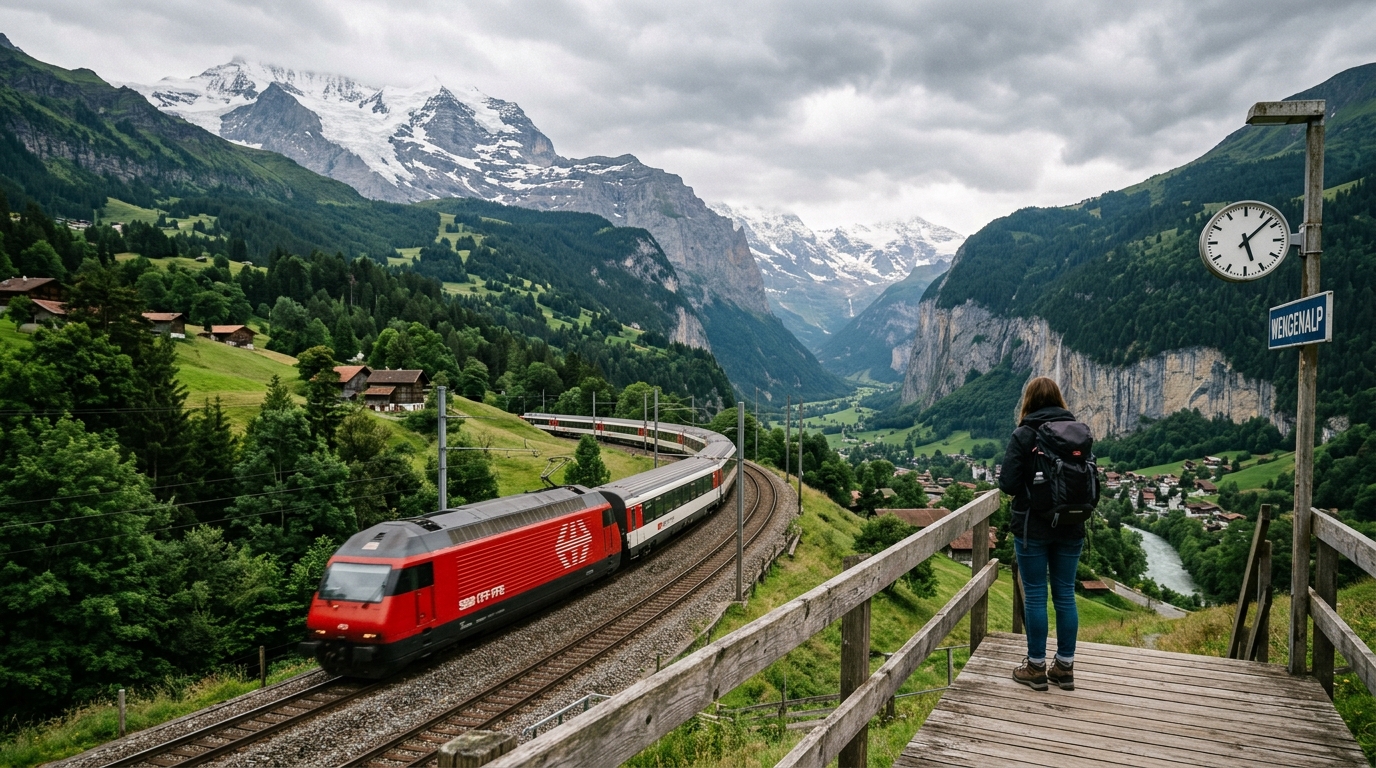
Key Takeaway: The 4-day Swiss Travel Pass costs approximately CHF 295 (~$340) in 2026 and provides unlimited travel on trains, boats, and premium panoramas. It pays for itself if you plan at least two long-distance mountain transfers and one scenic route. Book your Swiss Travel Pass online to receive a digital copy instantly and bypass the ticket office lines.
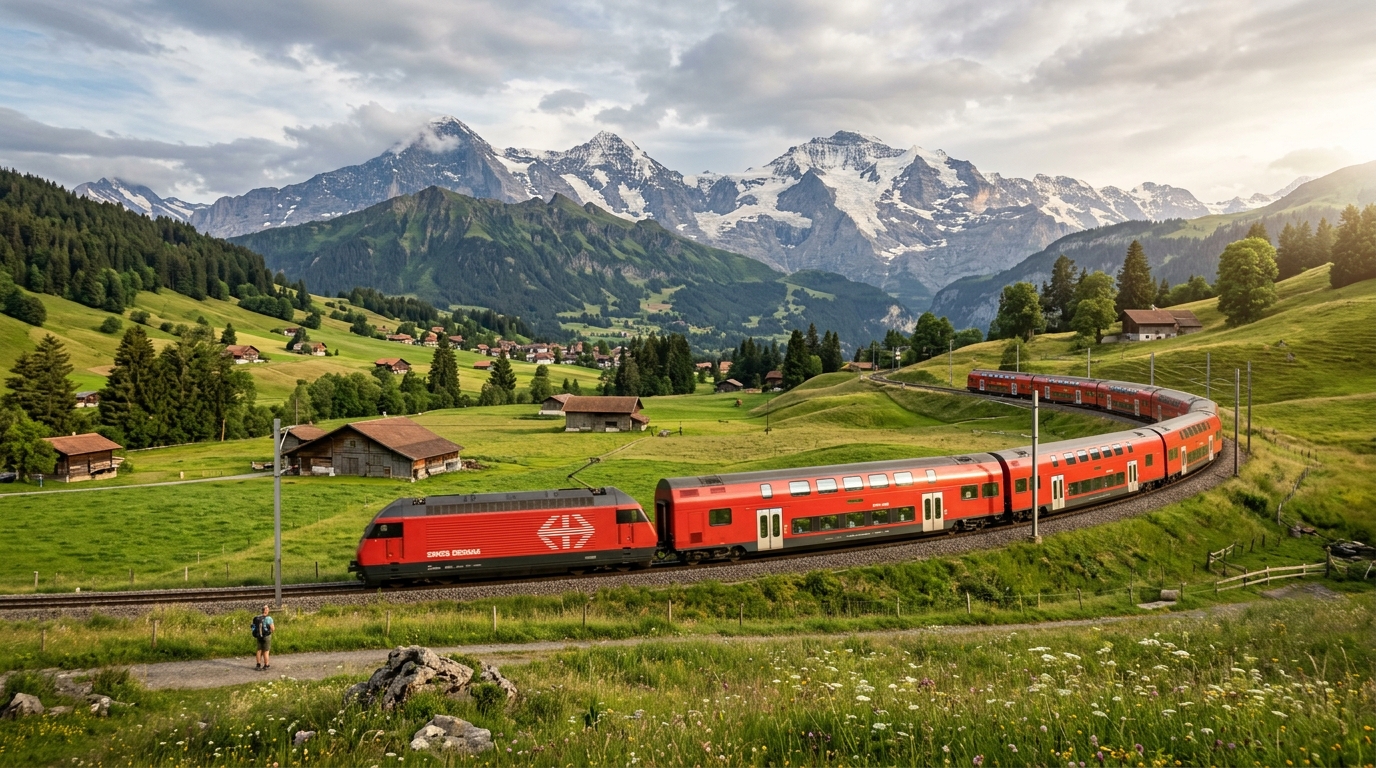
The train door closes at exactly 10:02:00. If you arrive at 10:02:05, you are not just late; you are watching a red taillight disappear toward the Alps. Traveling Switzerland by train is a masterclass in clockwork engineering where the scenery actually lives up to the postcards. This guide cuts through the logistics to get you from the Zurich airport terminal to a high-altitude peak without breaking a sweat. The Swiss rail network is arguably the most dense and reliable transit system on the planet.
Quick Overview of Swiss Rail Travel
Before you pack your bags, understand that the Swiss Federal Railways (SBB) functions more like a giant, country-sized subway system than a traditional railroad. You rarely need to worry about missing a specific train because another one is usually coming in 30 minutes. Here is what the 2026 landscape looks like for first-time visitors.
| Feature | Details | Recommendation | Action |
|---|---|---|---|
| Primary Pass | Swiss Travel Pass (3, 4, 6, 8, 15 days) | Best for multi-city touring | Check Pass Prices |
| Standard Route | Zurich to Lucerne (45-55 mins) | Runs every 30 minutes | Book Individual Tickets |
| Scenic Route | Glacier Express (8 hours) | Requires mandatory reservation | Reserve Scenic Seats |
| Luggage Service | Station-to-station delivery | CHF 12 per bag | Ship bags early |
Which Swiss Travel Pass Should You Buy?
Choosing the right ticket is the most expensive decision you will make. Most visitors default to the Swiss Travel Pass (STP), which offers "all-you-can-eat" access to the network. It covers trains, buses, boats, and even public transport in over 90 cities. But it isn't always the cheapest route for everyone. In 2026, the Half Fare Card remains the champion for travelers who plan to stay in one region for several days.
The Swiss Travel Pass (All-Inclusive)
This is the "stress-free" option. You simply hop on any train, show the QR code on your phone to the conductor, and keep moving. It includes the "Museum Pass," giving you free entry to 500+ sites like the Chillon Castle. If you are moving every two days, this is your best bet. Book your 2026 Swiss Travel Pass here to ensure you have the mobile-ready version before you land.
The Half Fare Card (The Budget Choice)
You pay a flat fee of roughly CHF 120, and for the next month, every ticket you buy is 50% off. This includes the expensive cable cars to peaks like the Jungfraujoch or Pilatus. If your itinerary involves a lot of mountain excursions but very few long-distance train rides, this card will save you more money than the STP. You can compare these options and buy your Half Fare Card online to avoid the paperwork at the station.
How Do You Read Swiss Train Schedules?
The SBB Mobile app is your new best friend. Seriously, do not attempt this trip without it. It provides real-time data on delays, platform changes, and even how crowded each carriage is likely to be. Swiss schedules are "integrated," meaning the bus at the end of the line is timed to wait for the train's arrival.
When you look at a schedule, pay attention to the "Gleis" (Platform) number. This is almost never changed at the last minute, unlike in the US or UK. If the app says Gleis 4, the train will be at Gleis 4. Look for the "Occupancy" icons—three little stick figures. If two or three are red, that carriage will be packed, and you should consider walking further down the platform to a quieter section. The most important rule of Swiss schedules is the "Taktfahrplan," which ensures trains depart at the same minutes past every hour.
Checking schedules early helps you spot "Supersaver" tickets. These are tied to a specific train time and cannot be changed, but they offer discounts of up to 70%. You can find Supersaver deals on swissrail.net if you are willing to commit to a specific departure time.
Navigating Stations and Platform Etiquette
Swiss stations are incredibly logical, but they can be massive. Zurich Hauptbahnhof (HB) has multiple levels, including an underground shopping mall and dozens of tracks. Look for the large blue "S" signs if you are looking for local suburban trains, or the standard track numbers for long-distance InterCity (IC) trains.
Once you are on the platform, look at the overhead screens. They divide the platform into "Sectors" labeled A, B, and C. The screen will show you exactly where the 1st class and 2nd class carriages will stop. Position yourself in the correct sector before the train arrives to avoid a frantic sprint with your suitcase.
Etiquette is taken seriously here. When you board, do not block the aisles. If you are in a "Quiet Zone" (look for the silence icons on the windows), keep your voice to a whisper and put your phone on silent. Swiss commuters value their peace. Also, it is perfectly acceptable to eat on the train, but avoid anything with a strong odor. Nobody wants to smell your tuna sandwich in a sealed carriage.
Handling Luggage Without the Stress
The biggest mistake first-timers make is hauling oversized suitcases through narrow train aisles. While there are luggage racks at the end of most carriages and space between back-to-back seats, they fill up fast. If you have a massive bag, you might end up standing in the vestibule for two hours. Honestly, it's better to pack light or use the SBB luggage services.
SBB offers a "Station-to-Station" service where you drop your bags at one station and pick them up at another two days later. For a premium, they even offer "Door-to-Door" delivery. You can leave your bags at your hotel in Zurich and find them waiting in your room in Zermatt. Using the SBB luggage transfer service costs about CHF 12-15 per bag and is the single best way to enjoy a scenic detour without being a pack mule.
Building a Smooth 10-Day Itinerary
The key to a great Swiss itinerary is not trying to see everything. Switzerland is small, but the mountains make travel slower than it looks on a map. A classic "First-Timer" loop usually starts in Zurich and circles through the heart of the Bernese Oberland. A well-planned Swiss itinerary balances city culture with high-alpine adventure by using Lucerne as a central hub.
| Day | Route | Duration | Highlights | Booking Link |
|---|---|---|---|---|
| 1-2 | Zurich to Lucerne | 50m | Chapel Bridge, Mt. Pilatus | Book Zurich-Lucerne |
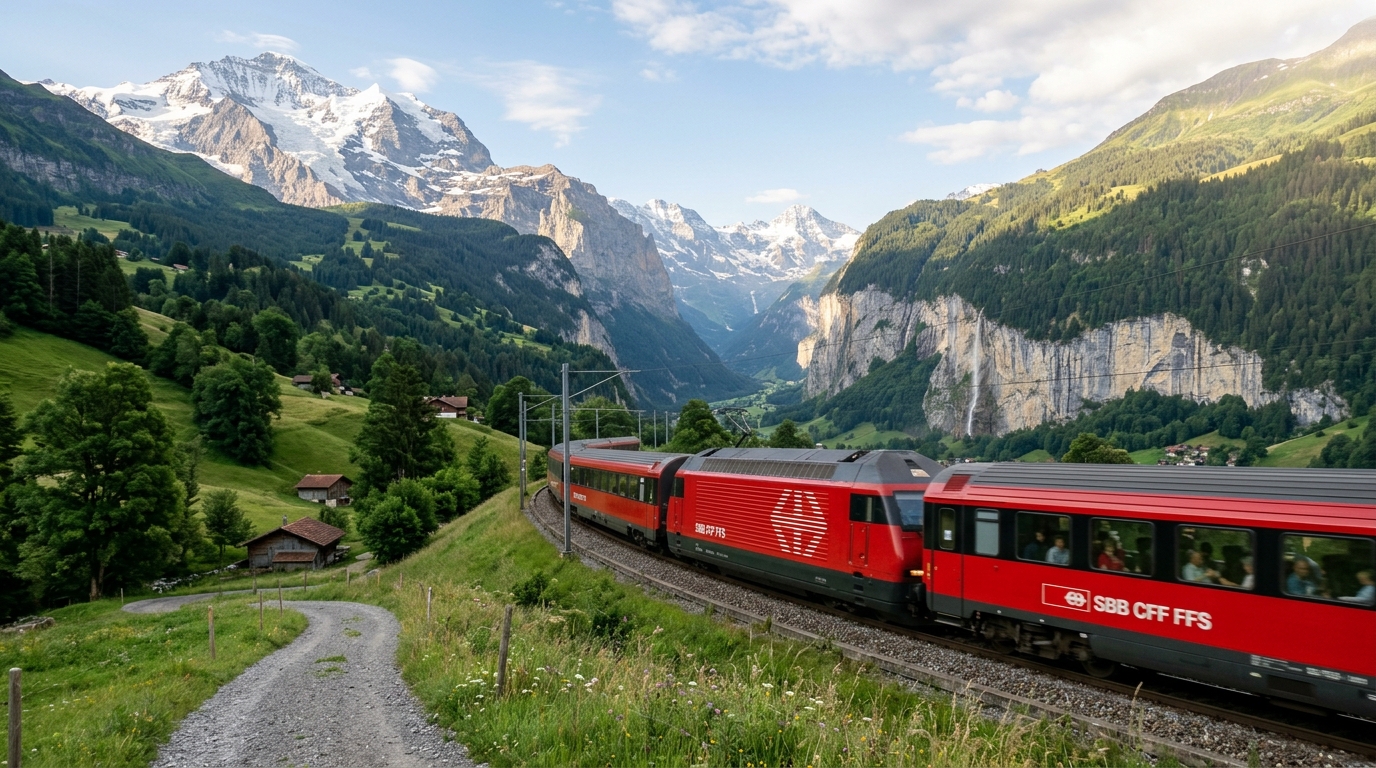
| 3-5 | Lucerne to Interlaken/Lauterbrunnen | 2h | Waterfalls, Jungfraujoch | Book Interlaken Express |
| 6-8 | Interlaken to Zermatt | 2h 15m | Matterhorn, Gornergrat | Book Zermatt Tickets |
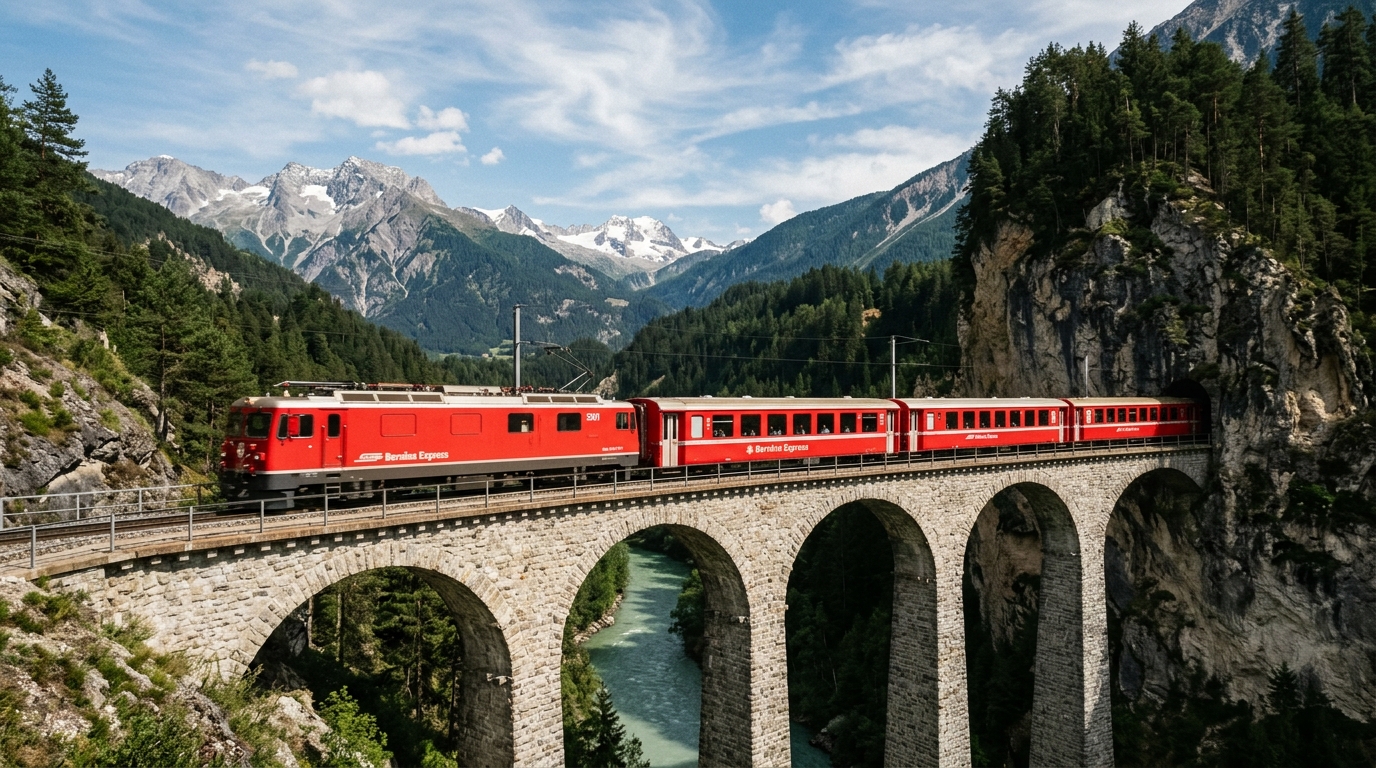
| 9-10 | Zermatt to St. Moritz (Glacier Express) | 8h | Landwasser Viaduct | Reserve Glacier Express |
When planning your transfers, give yourself at least 10 minutes. While the SBB app might suggest a 4-minute transfer, that is tight for someone unfamiliar with the station layout. If you miss a connection, don't panic. Just take the next one; your ticket (unless it's a Supersaver) is valid for any train on that route for the entire day. Plan your custom itinerary on swissrail.net to see real-time connection possibilities.
Last-Mile Planning: Cable Cars and PostBuses
The train gets you to the valley, but the "Last Mile" is where the magic happens. In Switzerland, your train ticket or pass often covers the bright yellow PostBuses. These buses reach the tiny villages that are too steep for tracks. They are famous for their three-tone horn that echoes through the mountain passes.
For high-altitude peaks, you will switch to cable cars or funiculars. If you have the Swiss Travel Pass, many of these are discounted by 50%, though a few (like Mt. Rigi or Stanserhorn) are completely free. Always check the weather webcams at the valley station before buying a cable car ticket. Spending CHF 100 to ride a cable car into a literal cloud is the most common tourist regret in the Alps.
Pro Tips for a Flawless Trip
- Download the SBB Mobile App early: Register your credit card and pass details before you leave home. This allows for "EasyRide," where you just swipe to start and swipe to finish your journey, and the app calculates the cheapest fare.
- Sit on the right side from Zurich to Lucerne: You get the best lake views as you approach the city. For the Bernina Express, the right side is also generally preferred for the best Alpine vistas.
- Skip the seat reservations: Unless you are on a premium panoramic train like the Glacier Express, you do not need a seat reservation. They cost extra and aren't necessary; just find an empty seat and sit down.
- Use the "Family Coach": If you are traveling with kids, look for the Ticki Park coach on double-decker IC trains. It features a literal playground inside the train carriage.
- Validate your pass: If you have a paper pass (rare in 2026), you must get it stamped before your first journey. Digital passes from swissrail.net are pre-validated for your selected dates.
- Tap water is king: Don't buy bottled water. Every station has fountains with some of the cleanest mineral water in the world. Bring a reusable bottle.
- Check the "Change of Direction": At stations like Zurich HB or Luzern, the train might enter and leave from the same side, meaning your "forward-facing" seat will suddenly be backward for the second half of the trip.
Frequently Asked Questions
Do I need to book Swiss train tickets in advance?
No, you can generally buy tickets five minutes before departure at a kiosk or on the app. However, booking "Supersaver" tickets 1-2 weeks in advance on swissrail.net can save you up to 70% compared to walk-up prices. For scenic trains like the Glacier Express, you must book seat reservations months ahead as they frequently sell out.
Is 1st class worth the extra money in Switzerland?
First class offers wider seats, more legroom, and significantly quieter carriages, but the 2nd class is already cleaner and more comfortable than most "First Class" options in other countries. If you are traveling during peak commute hours (7-9 AM or 5-7 PM), the extra space in 1st class is a godsend. You can upgrade a 2nd class pass for a single journey via the SBB app or swissrail.net.
How much does a 4-day Swiss Travel Pass cost in 2026?
The 2026 price for a 4-day 2nd class adult Swiss Travel Pass is approximately CHF 295. Prices are subject to seasonal adjustments, so it is best to check the latest rates on swissrail.net before your trip. Youth under 25 usually receive a 15-30% discount on these rates.
What happens if I miss my connection?
Standard tickets and the Swiss Travel Pass allow you to board the next available train on the same route. You do not need to talk to a gate agent or change your ticket. The only exception is the "Supersaver" ticket, which is void if you miss the specific train listed on the PDF. If a delay caused by SBB makes you miss your connection, they will honor your ticket on the next train regardless of the type.
Can I travel from the airport directly by train?
Yes, both Zurich (ZRH) and Geneva (GVA) airports have major train stations located directly underneath the terminals. You can be on a train heading toward the mountains within 15 minutes of clearing customs. You can buy your airport transfer ticket online to avoid fumbling with currency at the station kiosks.
The Final Word
Switzerland is one of the few places where the journey truly is the destination. You don't need a rental car, and you certainly don't need to stress over the logistics. The system is designed to be intuitive, clean, and relentlessly punctual. Whether you are climbing the steep grades of the Albula Pass or gliding along the shores of Lake Geneva, the rail network is your golden ticket to the best the country has to offer. Ready to start your Alpine adventure? Book your Swiss rail passes and tickets at swissrail.net today and get ready to see the mountains through a panoramic window.