
Book Train Tickets Online in Asia 2026: Fast & Easy Guide

Key Takeaway: The rapid expansion of high-speed rail makes crossing Asian borders faster and more comfortable than flying. A standard-class Shinkansen ticket from Tokyo to Kyoto costs roughly $85 and takes just 2 hours and 15 minutes. Skip the confusing ticket machines at the station. You can book Asia train tickets online for most major routes directly in English to guarantee your seat.
The dining car smells faintly of hot green tea. Outside your window, dense neon cityscapes suddenly give way to emerald rice paddies at 300 kilometers per hour. Figuring out how to book Asia train tickets in 2026 used to require endless patience and three different translation apps. But the digital ticketing systems have finally caught up with the world-class hardware. You no longer need to stand in a sweaty queue at Bangkok's Hua Lamphong or decipher a flashing kanji screen in Shinjuku.
The rules of the rails have changed. Paper tickets are rapidly becoming museum artifacts across the continent. So, if you want that window seat facing Mount Fuji or a lower berth on the overnight express to Varanasi, you need a strategy. Let me walk you through exactly how to navigate this massive, interconnected network.
What You Need to Know About Asia Train Tickets at a Glance
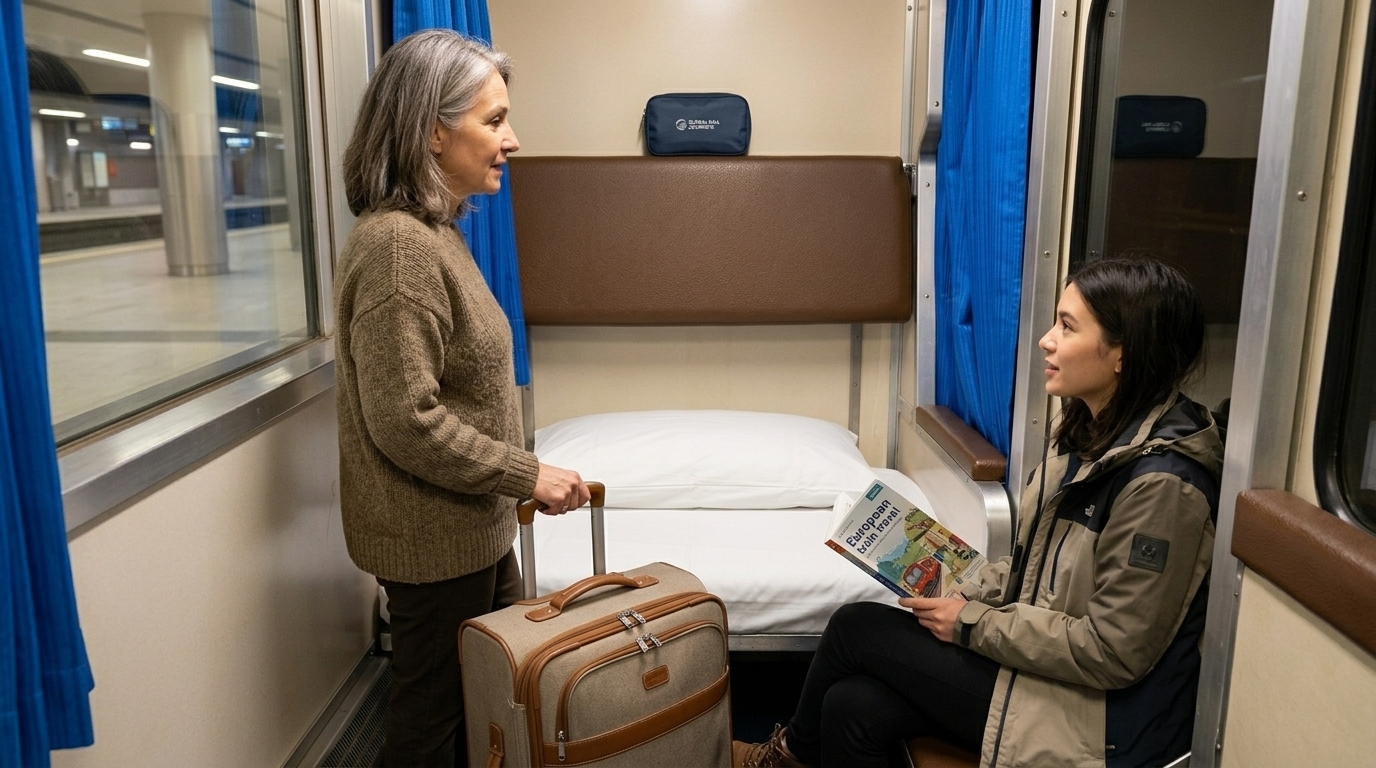
Asia does not have a single, unified rail network like Europe's Eurail system. Every country operates its own highly specific digital infrastructure. When purchasing Asia train tickets, here are the baseline rules for 2026:
- Passports are your ticket. In China and Taiwan, digital turnstiles scan your physical passport to grant you access to the platform.
- Dynamic pricing is everywhere. Fares in Japan and South Korea now fluctuate based on demand, meaning walk-up tickets cost significantly more.
- Booking windows vary wildly. Indian sleeper trains open 120 days in advance, while Japanese bullet trains open just 30 days prior.
- Luggage rules are strict. Oversized baggage on the Shinkansen requires a specific, pre-reserved seat at the back of the carriage.
Booking Bullet Trains: Japan and South Korea
Japan set a high standard for rail travel decades ago. South Korea quietly built a network that rivals it in both speed and efficiency. Both countries recently overhauled their digital booking platforms. While the technology is advanced, securing Asia train tickets for these high-speed routes still requires some planning.
The famous Japan Rail Pass saw a massive price hike a few years ago. In 2026, individual Shinkansen tickets are often 30% cheaper than buying a nationwide rail pass if you are only doing the classic Tokyo-Kyoto-Osaka golden route. You really need to do the math before committing to a pass. Buying point-to-point tickets is incredibly easy now. But the official English websites can still be clunky and prone to rejecting foreign credit cards. When you are ready to lock in your itinerary, you can check latest prices on www.9rail.com to bypass those frustrating payment gateway errors.
South Korea offers the KTX and the newer SRT trains. The KTX shoots from Seoul to Busan in under two and a half hours. The legroom in standard class puts most international airlines to shame. If you are looking for Asia train tickets that offer both speed and comfort, the KTX is hard to beat. You can bring your own food aboard, and the stations are packed with excellent bento box vendors.
| Route | Train Type | Avg Price (USD) | Travel Time | Booking Link |
|---|---|---|---|---|
| Tokyo to Kyoto | Nozomi Shinkansen | $85 - $95 | 2h 15m | Book Tokyo-Kyoto |
| Seoul to Busan | KTX High-Speed | $45 - $55 | 2h 15m | Book Seoul-Busan |
| Osaka to Hiroshima | Sakura Shinkansen | $65 - $75 | 1h 25m | Book Osaka-Hiroshima |
Decoding the High-Speed Giants: China and Taiwan
China operates the largest high-speed rail network on the planet. Taiwan operates one of the most efficient lines down its western coast. Navigating either system requires understanding their unique digital ecosystems.
The official Chinese booking app, 12306, finally supports foreign phone numbers and credit cards. China's railway network now requires a biometric or passport scan at the digital turnstile, completely eliminating paper tickets for foreign travelers. But the app still occasionally mistranslates station names, leading to expensive mistakes. (Booking a ticket to "Beijing" instead of "Beijing South" will put you an hour away from your hotel). Taiwan's High Speed Rail (THSR) is much simpler to navigate. They offer early bird discounts up to 35% off if you book 28 days in advance. To secure those specific early bird discounts without wrestling with time zones, you should book Asia train tickets online through a dedicated English aggregator.
The speed here is impressive. For those holding Asia train tickets on the Fuxing bullet trains, China cruises at 350 kilometers per hour. The ride is so smooth you can balance a coin on the window ledge.
| Route | Train Type | Avg Price (USD) | Travel Time | Booking Link |
|---|---|---|---|---|
| Beijing to Shanghai | Fuxing EMU (G-Train) | $88 - $95 | 4h 28m | Book Beijing-Shanghai |
| Taipei to Kaohsiung | THSR Standard | $40 - $48 | 1h 30m | Book Taipei-Kaohsiung |
| Hong Kong to Guangzhou | Vibrant Express | $30 - $35 | 48m | Book HK-Guangzhou |
Southeast Asia's New Rail Routes in 2026
Southeast Asia was historically the land of cheap domestic flights and slow buses. That reality has shifted. New standard-gauge railways are cutting straight through the jungles.
The Laos-China Railway is a clear example of this shift. The Vientiane to Luang Prabang journey now takes just two hours on a sleek EMU train, replacing what used to be a ten-hour bus ride. Getting tickets for this train used to require bribing a local agent at the station. Fortunately, digital ticketing rolled out recently, though the official LCR app is notoriously glitchy. To ensure a smooth trip, securing your Asia train tickets for the Laos-China line early is vital. Thailand has also upgraded its night trains. The newer Chinese-built sleeper cars running from Bangkok to Chiang Mai feature USB ports, reading lights, and surprisingly crisp linens. You can easily secure Thai sleeper train tickets before they sell out during the busy dry season.
Expanding South: Vietnam and Malaysia
Beyond the high-speed giants, countries like Vietnam and Malaysia offer incredibly scenic and reliable rail journeys. Vietnam's Reunification Express runs the entire length of the country from Hanoi to Ho Chi Minh City. While not a bullet train, the journey offers unmatched views of the Hai Van Pass. In Malaysia, the ETS (Electric Train Service) connects Padang Besar at the Thai border all the way down to Gemas, cruising at a comfortable 140 km/h. Booking Asia train tickets for these routes in advance is highly recommended during local holidays like Tet or Hari Raya.
Indian Railways: Securing Your Berth Online
Riding the rails in India is a rite of passage. It is chaotic, deeply beautiful, and logistically complex. The Indian Railway Catering and Tourism Corporation (IRCTC) handles millions of bookings daily.
Creating an IRCTC account as a foreigner involves a small fee and receiving a one-time password via SMS. Booking Indian trains requires registering your foreign mobile number with IRCTC at least 48 hours before you attempt to buy a ticket. When searching for Asia train tickets on the subcontinent, the system opens 120 days in advance, and popular routes like Delhi to Agra or Mumbai to Goa sell out in minutes. Look for trains designated as Vande Bharat Express. These are India's newest semi-high-speed daytime trains, featuring aircraft-style seating and excellent onboard catering. If the IRCTC registration process sounds like a headache, you can simply book Indian train tickets online through our streamlined system and skip the SMS verification entirely.
6 Pro Tips for Asian Train Travel
After thousands of miles on these tracks, I have learned a few hard lessons. Here is how you avoid the rookie mistakes in 2026:
- Always book the lower berth in India. The upper berths require climbing a tiny ladder, and you miss out on the window views. The lower berth acts as the communal sofa during the day, but it is yours to sleep on at night.
- Reserve oversized luggage space in Japan. If your suitcase dimensions total more than 160cm, you must book a specific seat with luggage space behind it. If you board without this reservation, the conductor will fine you 1,000 yen.
- Pack layers for Southeast Asia. The outside temperature in Thailand might be 35°C, but the air conditioning on the sleeper trains is set to arctic levels. A light fleece jacket is absolutely mandatory.
- Check the station names carefully. Cities like Osaka and Beijing have multiple massive rail hubs. "Shin-Osaka" is where the bullet trains stop, not "Osaka Station."
- Use an English aggregator for peace of mind. Payment gateways in Asia often reject foreign Visa and Mastercard transactions. Using a platform like www.9rail.com to book your Asia train tickets ensures your card goes through and your tickets are issued instantly in English.
- Bring your own toilet paper. While high-speed trains in Japan and Korea are pristine, standard-class trains in India and parts of Southeast Asia frequently run out of supplies by mid-journey.
Frequently Asked Questions
How far in advance can I book Asia train tickets?
Booking windows in Asia vary by country, ranging from 120 days for Indian Railways to 30 days for Japan’s Shinkansen. It is essential to check the specific operator's policy as high-demand routes sell out quickly when you look to book Asia train tickets.
Is the Japan Rail Pass worth it in 2026?
The Japan Rail Pass is often more expensive than point-to-point tickets in 2026 unless you are traveling extensively across multiple regions within a short timeframe. For simple routes like Tokyo to Kyoto, individual tickets are generally more cost-effective.
Do I need a physical ticket for trains in China?
No physical ticket is required for trains in China because the ticketing system is fully integrated with your passport or national ID. You simply scan your passport at the station gates to board your train.
Can I use international credit cards to book Asian train tickets?
Most official Asian rail websites now accept international credit cards, although some travelers still encounter processing issues on government-run platforms. Using a dedicated travel booking service to buy Asian train tickets can often bypass these payment hurdles.
Are there luggage restrictions on Asian high-speed trains?
Yes, specific luggage rules apply on Asian high-speed trains, such as the Shinkansen's requirement to reserve a specific seat if you are carrying oversized baggage. Failure to reserve these spots can result in fines or being denied boarding.
What is the fastest way to travel between Tokyo and Kyoto?
The Nozomi Shinkansen is the fastest way to travel between Tokyo and Kyoto, completing the journey in approximately 2 hours and 15 minutes. This service runs frequently throughout the day and is the preferred choice for business and leisure travelers.